


Pros
Blistering acceleration
Noticeably more refined
Feels like a complete, finished performance package
Cons
Real-world driving range takes a hit
Comes equipped with all-season tires
So discreet it almost disappears into traffic
American enthusiasts have long chased one obsession: cheap speed. Yet in the post-pandemic reality of soaring new-car prices, that dream feels increasingly out of reach, as average transaction costs continue to climb into record territory. Still, an unlikely hero has stepped into the spotlight—born from a brand that recently retired its most extreme flagship and now speaks more about autonomous futures than raw mechanical drama. Ironically, the most compelling value in modern performance now comes from the 2026 Tesla Model 3 Performance.
Plaid for the People
Speed in a straight line has always been part of America’s automotive identity—much like baseball—and so has the pursuit of a good deal. Supercars are admired, but it’s the affordable muscle machine that becomes cultural shorthand: a way to embarrass wealthier rivals with nothing more than a green light and a right foot.
Today’s standard-bearer isn’t a V8 muscle car or a boosted import—it’s an electric sedan built in the United States.
Here’s the headline figure: 2.9 seconds to 60 mph. That number alone places the new Model 3 Performance in rare air. Dig through performance testing archives and you’ll find almost nothing that matches it near this price point. Starting at $56,380, it undercuts anything with comparable straight-line speed by a wide margin. The closest challengers—the Hyundai Ioniq 5 N and Chevrolet Corvette—still ask for significantly more money.
This isn’t framed as “cheap” speed so much as accessible performance. For the price of a midsize family SUV, you’re effectively getting a sports sedan capable of humiliating six-figure machinery at traffic-light launches. It stretches the definition of affordable, but within the performance world, it still feels like a bargain.
And the story doesn’t end at launch control. The Model 3 Performance runs the quarter mile in 11.1 seconds at 123.2 mph. Again, only a handful of far more expensive machines—the Ioniq 5 N and Corvette among them—operate in the same neighborhood. Anything brushing 10-second territory typically lives in a much higher price bracket.
There is one natural comparison point: the previous-generation Model 3 Performance. That car reached 60 mph in 3.2 seconds and completed the quarter mile in 11.7 seconds at 115.7 mph. It also cost roughly $10,000 more when new, and even more when adjusted for inflation, pushing its modern equivalent well into luxury-car territory.
Tired of Winning
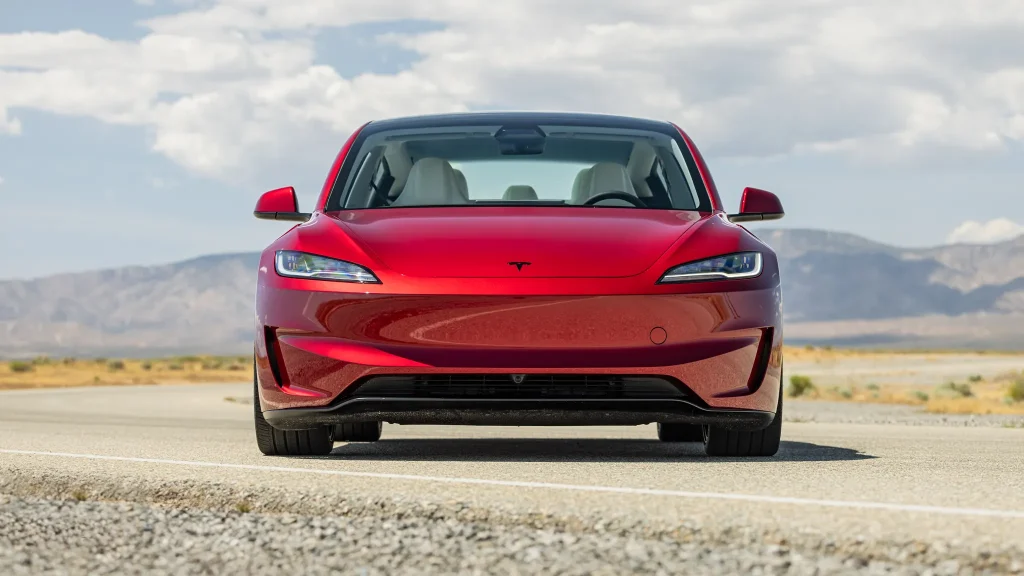
On paper, the new model sharpens the formula—but not in every direction.
Braking from 60 mph now takes 116 feet, notably longer than before. Lateral grip sits at 0.93 g, fractionally down from the prior generation. In figure-eight testing, it also trails slightly, posting a 24.6-second lap versus 24.3 previously.
The reason isn’t mystery engineering regression—it’s tires. The outgoing car wore Michelin Pilot Sport 4S summer tires, while this test vehicle came equipped with Pirelli P Zero all-season performance rubber. The trade-off favors usability and efficiency over outright grip, even adding a small boost in range. With proper summer tires, the performance gap would likely swing back in the new car’s favor.
That tire choice raises questions. It’s plausible Tesla prioritized real-world usability and range consistency over peak track numbers. In practice, the result is a car that still delivers serious straight-line performance while softening its absolute limits for broader conditions.
Range itself appears to be improving across the lineup. In independent highway testing at 70 mph, the car achieved 265 miles, roughly 16% below EPA estimates—typical for current Tesla products but still respectable given the performance on tap.
Performance, Matured
From behind the wheel, the transformation is more philosophical than dramatic. The earlier Model 3 Performance sometimes felt like a fast experiment still being refined. This version feels deliberate—like it was designed as a performance car from day one rather than adapted into one.
Track mode has evolved into its third iteration and now behaves more intuitively. A simple on-screen slider lets drivers shift handling balance from mild understeer to oversteer, with each adjustment producing a noticeable change in behavior. Interestingly, the best lap times came not from maximum aggression, but from a slightly conservative setup that introduced some understeer stability.
Still, there’s a lingering desire for more edge. The brakes feel capable of more than the tires allow, and both stopping performance and cornering grip feel somewhat constrained by the all-season setup. Summer tires would likely unlock a more complete expression of the chassis.
Stylistically, the car remains almost overly subtle. It’s a performance machine that refuses to announce itself—an intentional “sleeper” identity, though one that risks blending too seamlessly into the broader Model 3 lineup.
Specifications Snapshot (2026 Tesla Model 3 Performance)
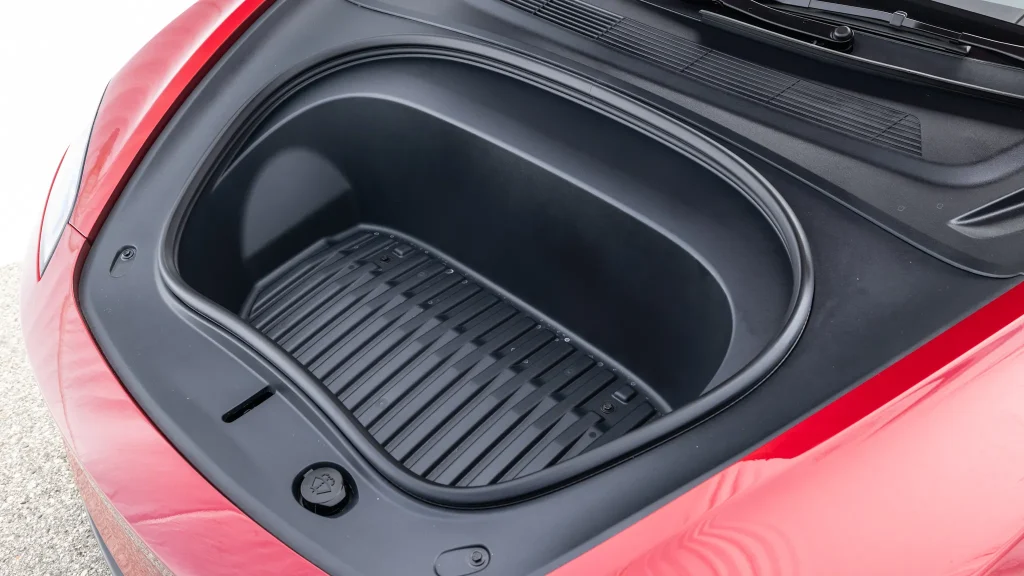
The package centers on a dual-motor all-wheel-drive layout producing 510 horsepower and 554 lb-ft of torque, powered by an 80.0-kWh battery pack. It weighs just over 4,000 pounds, balanced evenly front to rear.
Performance figures define its character:
- 0–60 mph: 2.9 seconds
- Quarter mile: 11.1 seconds @ 123.2 mph
- Braking: 116 feet (60–0 mph)
- Lateral grip: 0.93 g
- Figure-eight: 24.6 seconds
EPA estimates list 314 miles of range, with real-world highway testing producing about 265 miles. Fast charging adds roughly 142 miles in 15 minutes under test conditions.
A Quiet Benchmark
In the end, the 2026 Model 3 Performance doesn’t shout—it simply dominates quietly. It channels the American obsession with accessible speed into an electric form that feels almost understated in its execution.
Where muscle cars once ruled the stoplight duel, a near-silent sedan now carries the torch. It may not look the part, but in the one metric that matters most to many drivers—raw acceleration per dollar—it currently stands alone.
2026 Tesla Model 3 Performance Specifications | |
BASE PRICE | $56,380 |
PRICE AS TESTED | $56,380 |
VEHICLE LAYOUT | Front- and rear-motor, AWD, 5-pass, 4-door electric sedan |
POWERTRAIN | F: induction motor, 184 hp, 162 lb-ft |
TOTAL POWER | 510 hp |
TOTAL TORQUE | 554 lb-ft |
TRANSMISSIONS | 2 x 1-speed fixed ratio |
BATTERY | 80.0-kWh NCA lithium-ion |
CURB WEIGHT (F/R DIST) | 4,039 lb (50/50%) |
WHEELBASE | 113.2 in |
LENGTH x WIDTH x HEIGHT | 185.9 x 76.1 x 56.3 in |
TIRES | Pirelli P Zero MS Elect T0 |
EPA FUEL ECONOMY, | 117/106/111 mpg-e |
EPA RANGE | 314 mi |
70-MPH ROAD-TRIP RANGE | 265 mi |
MT FAST-CHARGING TEST | 142 mi @ 15 min, 209 mi @ 30 min |
ON SALE | Now |
MotorTrend Test Results | |
0-60 MPH | 2.9 sec |
QUARTER MILE | 11.1 sec @ 123.2 mph |
BRAKING, 60-0 MPH | 116 ft |
LATERAL ACCELERATION | 0.93 g |
FIGURE-EIGHT LAP | 24.6 sec @ 0.82 g (avg) |