


If attached incorrectly, the tire repair inflator can build pressure in the sealant bottle until it bursts.
Flat tires are never welcome news. That much hardly needs repeating. What once meant a roadside struggle with a jack and a spare wheel has, in many modern SUVs and sedans, been reduced to a quicker workaround: a tire repair kit paired with an inflator. The idea is simple — turn a stressful breakdown into a manageable pause rather than a dangerous ordeal on the roadside.
But that convenience is now under scrutiny. More than one million Honda vehicles have been pulled into a recall linked to faults in their tire inflator kits — systems that are meant to make emergencies safer, not introduce new risks.

Affected models include the 2023–2026 Honda CR-V Hybrid, the 2025–2026 Honda CR-V Fuel Cell EV, and the 2023–2026 Honda Accord Hybrid. According to Honda, the issue stems from the possibility that the nozzle attached to the valve stem may be incorrectly fitted during roadside use. In that scenario, air pressure can build up inside the sealant bottle instead of flowing into the tire as intended.
What makes the situation particularly precarious is how easily such an error could occur. On the shoulder of a highway, with traffic rushing past at full speed, even a simple misconnection becomes a risk. If airflow is blocked, pressure accumulates within the bottle rather than reaching the tire — until it can no longer be contained. In the worst cases, the sealant cap may detach abruptly, releasing a sudden burst of pressurized air and fluid.
Honda notes that the system does include safety components, such as relief valves and a fluid leak prevention mechanism. However, these safeguards may not fully counteract the pressure buildup. Compounding the issue, the leak prevention valve is designed as a one-way system, meaning trapped pressure can persist inside the container. In at least eight reported incidents, the force of the rupture was strong enough to cause injuries, though the severity has not been publicly detailed.
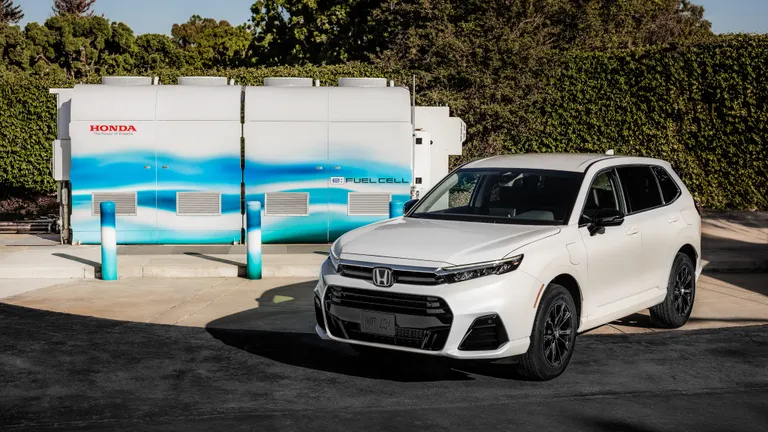
The remedy itself is straightforward. Dealers will replace both the sealant nozzle and the bottle assembly, even if the kit has never been used. All affected owners will receive the repair free of charge as part of the recall response.
In theory, a tire repair kit should be a small piece of reassurance in the trunk. In practice, this issue shows how quickly that reassurance can turn into an unexpected hazard when design and real-world use collide.